

Why Is Hex Nut Indispensable in Mechanical and Construction Projects?
Article Summary
Hex Nut serves as one of the most essential foundational fasteners in modern machinery manufacturing and construction engineering. With standardized structural design, superior material performance and diverse surface processing technologies, this fastener solves core structural fixing and anti-loosening problems for industrial equipment and building structures. This content sorts out its unique material advantages, global mainstream standard specifications and environmental adaptation capabilities, and elaborates on scientific installation specifications and torque control skills. Meanwhile, it compares the application value of different types of fasteners in multiple scenarios, provides targeted product selection suggestions, and guides engineering personnel to match high-quality accessories to effectively guarantee project stability, safety and long service life.
Table of Contents
- What Is Hex Nut and Its Core Value
- Material Advantages and Durability
- Common International Standards and Specifications
- Surface Treatment and Environmental Adaptability
- Correct Installation and Torque Control
- Wide Applications in Various Industries
- How to Choose the Right Hex Nut
- Reliable Manufacturer Recommendation
- Frequently Asked Questions
What Is Hex Nut and Its Core Value
In the entire industrial manufacturing and construction system, fasteners are the basic units that support structural integrity. Among all types of fastening accessories, Hex Nut has become the most widely adopted structural fastener due to its balanced structural design, convenient operation and stable anti-loosening performance. It is always used in conjunction with matching bolts to lock mechanical parts and building components, avoiding structural displacement and loosening caused by external vibration, pressure and temperature changes.
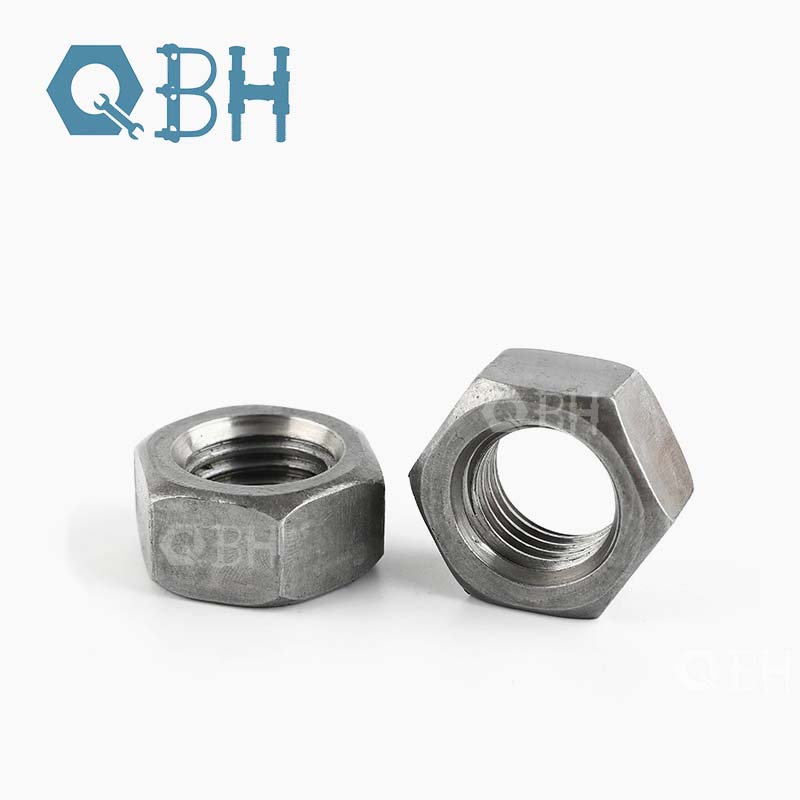
From a structural perspective, its unique hexagonal outline is the key to its wide popularity. Different from square nuts with large operation limitations and round nuts prone to slipping, the six-sided equal-angle design provides uniform stress points for tool operation. Wrenches and sleeve tools can form stable contact with the nut surface, which greatly improves the efficiency of manual and mechanical assembly, and also avoids sliding damage during high-torque tightening.
From a functional perspective, the edge ridge design of standard nuts further optimizes the fastening effect. The tiny anti-slip lines on the edge can generate extra friction during locking, which can maintain long-term fastening stability even in continuous vibration environments such as mechanical operation and traffic infrastructure. This inherent anti-loosening property makes it far more practical than ordinary flat fasteners.
From an industrial perspective, standardized dimensional design realizes universal matching of accessories. Whether it is miniature precision electronic equipment or large-scale heavy industrial machinery, unified specifications can meet the assembly needs of different scenarios, greatly reducing the cost of component replacement and equipment maintenance for enterprises and engineering projects.
Material Advantages and Durability
The comprehensive performance and service life of industrial fasteners are fundamentally determined by raw material quality. Qualified fastener products adopt high-purity industrial steel materials, which are processed through standardized heat treatment to achieve excellent hardness, toughness and structural stability, adapting to complex and changeable working environments.
First, carbon steel materials for conventional scenarios. Carbon steel is the most cost-effective mainstream material for mass production. It has high tensile strength and good ductility after quenching and tempering treatment, which can fully meet the fastening needs of general machinery, civil construction and daily equipment. It is the preferred material for most conventional engineering projects due to its stable performance and low comprehensive cost.
Second, alloy steel materials for high-load scenarios. On the basis of carbon steel, alloy steel is added with chromium, molybdenum and other metal elements, which significantly improves high-temperature resistance, pressure resistance and wear resistance. It is specially used for heavy machinery, petrochemical equipment and high-pressure pipeline connection scenarios that require extreme load-bearing capacity.
Third, stainless steel materials for corrosive scenarios. Stainless steel has natural rust-proof and anti-corrosion characteristics, which can resist the erosion of humid air, salt fog and chemical medium. It is widely used in marine engineering, food equipment, medical facilities and outdoor municipal projects to avoid component failure caused by rust and corrosion.
Strict raw material screening and standardized processing technology ensure that finished products will not deform, crack or slip during long-term use, providing solid basic guarantee for the safety and stability of the overall structure.
Common International Standards and Specifications
To adapt to the procurement and construction standards of different countries and regions in the world, industrial fasteners have formed a complete set of international unified standard systems. Different standards have clear regulations on nut size, thread pitch, strength grade and tolerance, realizing global interchangeability of products and facilitating cross-border engineering matching and after-sales replacement.
| Standard Code | Product Attribute | Applicable Scenarios |
|---|---|---|
| DIN934 | Carbon Steel Standard Nut | European machinery, automotive manufacturing |
| GB6175 | Thickened Hexagon Nut | Domestic construction and mechanical engineering |
| DIN970 | Metric Fine Pitch Nut | Precision mechanical assembly |
| ISO4034 | General Universal Nut | Global cross-border general projects |
| ANSI B18.2.2 | Imperial Standard Nut | North American market engineering projects |
These standardized products cover complete sizes from small M3 to large M64, and match different strength grades. Engineers can select corresponding standard products according to project regional standards and load requirements, effectively avoiding assembly errors and structural safety hazards caused by non-standard accessories.
Surface Treatment and Environmental Adaptability
Surface finishing is a pivotal post-production process that optimizes corrosion resistance and outdoor adaptability for industrial fasteners. Different coating processes create distinct protective layers to help finished products cope with humidity, acid mist, ultraviolet exposure and chemical erosion across diversified working surroundings.
- Zinc Plating: Cost-effective common coating forming compact protective film against mild rust, suited for indoor equipment and normal atmospheric outdoor installation.
- Chromium Plating: Delivers high surface hardness and glossy appearance for high-end mechanical parts requiring frequent disassembly and premium surface finish.
- Black Oxide: Uniform black finish with slight anti-rust and anti-slip property widely used in precision instruments and miniature component assembly.
- Hot-dip Galvanizing: Thick zinc alloy layer offering outstanding long-term anti-corrosion performance for outdoor power infrastructure and highway engineering fittings.
- Dacromet Coating: Eco-friendly non-electroplated coating with superior salt spray resistance ideal for high-strength fasteners used on automotive chassis and heavy-duty components.
Project designers match appropriate surface treatment according to local environmental conditions to extend service cycle and cut later maintenance expense of finished fastener products.
Wide Applications in Various Industries
Thanks to reliable mechanical performance, precise dimensional standardization, excellent anti-loosening capability, and diverse material options, Hex Nut has become an indispensable basic component that runs through the entire modern industrial system. These versatile fastening parts can adapt to low-load precision assembly and heavy-duty industrial operation scenarios, covering lightweight civilian equipment, large industrial machinery, and super-scale infrastructure projects worldwide. Their stable physical properties and strong environmental adaptability make them the preferred fastening solution for engineers in multiple professional fields.
Mechanical Manufacturing IndustryAs the core supporting accessories for mechanical equipment assembly, these fasteners are widely used in machine tools, automated production lines, agricultural machinery, engineering machinery, and automotive component assembly. They firmly fix various mechanical parts, effectively resist continuous vibration and mechanical pressure during equipment operation, prevent structural displacement and component loosening, and ensure the long-term stable and efficient operation of mechanical systems. Standardized specifications support rapid assembly and later maintenance replacement, greatly improving industrial production efficiency.
Construction and Infrastructure Engineering
In building construction, bridge engineering, highway guardrails, tunnel structures, and municipal infrastructure projects, high-strength fasteners undertake important structural connection tasks. They connect steel structures, precast concrete components, and facility supports, bearing building load, wind pressure, and natural temperature changes. With excellent tensile strength and fastening stability, they guarantee the overall structural safety, firmness, and durability of large-scale construction projects, avoiding potential safety hazards caused by loose structural parts.
Electrical and Precision Electronic Industry
Miniature and medium-sized fasteners are commonly applied in household appliances, power distribution equipment, communication facilities, and precision electronic instruments. Featuring precise thread matching, small assembly gap, and stable locking performance, they fix internal precision components without causing structural damage or electrical failure. Their compact and standardized design meets the lightweight and high-precision assembly requirements of modern electronic and electrical equipment.
Marine and Petrochemical Industry
Marine engineering, offshore platforms, ship equipment, and petrochemical production environments are characterized by high humidity, strong salt fog, and chemical corrosion. Fasteners with stainless steel materials or special anti-corrosion surface treatments can effectively resist seawater erosion, acid-base chemical corrosion, and high-temperature pressure impact. They maintain stable fastening performance in harsh working conditions and greatly reduce equipment failure rate and component replacement frequency.
Aerospace and High-End Equipment Industry
In aerospace, defense equipment, and high-precision industrial fields, high-strength and high-precision fasteners are adopted. These products feature ultra-high tensile strength, precise dimensional tolerance, and extreme environmental resistance, which can adapt to high-altitude low temperature, high-speed vibration, and high-pressure working environments. They provide ultra-reliable structural guarantee for high-end precision equipment with extremely strict safety standards.
How to Choose the Right Hex Nut
Reasonable selection of Hex Nut is the key premise to ensure structural connection safety, extend equipment service life, and control project cost. Many engineering failures and equipment hidden dangers stem from improper model selection, such as mismatched specifications, insufficient material strength, and unadaptable surface treatment. To help purchasers and engineers make accurate matching, the selection process can be standardized based on five core dimensions, covering specification matching, material performance, surface technology, environmental adaptability, and supplier qualification.
First, Confirm Standard and Specification Matching
Different regional projects and mechanical equipment adopt different international standards, including DIN, GB, ISO, ANSI, and BS. Before purchasing, it is necessary to confirm the thread pitch, outer diameter, thickness, and tolerance grade of matching bolts to ensure complete specification compatibility. Mismatched standards will lead to inability to install, thread slipping, or insufficient fastening tightness, seriously affecting structural stability.
Second, Select Appropriate Raw Material Grade
Material selection must be matched with equipment load and working strength. Ordinary carbon steel is suitable for conventional indoor and low-load mechanical scenarios with cost advantages; alloy steel is the best choice for high-load, high-pressure, and high-temperature working environments; stainless steel materials are exclusively used for humid, salt fog, and chemical corrosion environments. Scientific material matching can balance performance and procurement cost effectively.
Third, Optimize Surface Treatment According to Environment
Different surface coatings determine the anti-corrosion ability and service life of fasteners. Electro-galvanizing is suitable for ordinary indoor environments; black oxide treatment applies to precision instruments requiring anti-slip and aesthetic effects; hot-dip galvanizing and Dacromet coating are ideal for outdoor infrastructure and coastal corrosion environments. Targeted surface treatment can avoid premature rusting and failure of fasteners.
Fourth, Combine Actual Working Conditions for Verification
Fully evaluate key environmental factors including ambient temperature, air humidity, vibration frequency, and corrosive medium concentration. For equipment with long-term continuous vibration, priority should be given to high-strength products with anti-loosening structure; for outdoor open-air projects, weather-resistant and anti-aging products must be selected to adapt to seasonal temperature changes and ultraviolet radiation.
Fifth, Cooperate With Qualified and Professional Suppliers
Choosing a certified manufacturer with complete production technology and strict quality inspection is crucial. Reliable suppliers can provide qualified products that meet international standards, complete quality certification, and professional after-sales technical support, effectively avoiding quality risks caused by inferior raw materials and rough processing.
Reliable Manufacturer Recommendation
Sourcing from certified professional factories guarantees stable product quality and consistent after-sale service. Jiaxing City Qunbang Hardware Co, Ltd. specializes in standardized fastener development and mass production with full-range specifications complying with DIN, ISO, ANSI and GB global standards. With years of dedicated manufacturing experience, advanced production equipment, and a complete quality control system, the company has established a leading position in the global fastener supply chain, earning high recognition and trust from worldwide customers.
The company’s product range covers all conventional and custom fasteners, using high-quality raw materials and advanced surface treatment processes to ensure stable performance, precise dimensions, and long service life. Every product undergoes strict dimensional testing, mechanical performance testing, and surface quality inspection before leaving the factory, fully meeting the strict requirements of construction, machinery, electronics, marine, and aerospace industries.
Whether you need standard stocked fasteners or customized non-standard products for special engineering projects, Jiaxing City Qunbang Hardware Co, Ltd. can provide personalized solutions, fast delivery cycles, and cost-effective procurement plans. Contact us immediately to get customized solution and favorable bulk quotation for your upcoming procurement plan, and let professional fastener solutions boost the safety and efficiency of your projects.
Frequently Asked Questions
Q1: What makes hexagonal shaped nuts more popular than other nut types?
A: Hexagonal outer profile provides stable wrench clamping surface with less slipping risk during tightening, occupying smaller installation space than square nuts and bringing higher assembly efficiency for automated production lines.
Q2: Can finished nuts be reused after disassembly?
A: Products with intact thread and no surface deformation can be reused after cleaning; defective items with worn threads need immediate replacement to prevent loose connection risks.
Q3: Which coating suits coastal outdoor installation?
A: Hot-dip galvanizing or Dacromet coating works best against heavy salt fog erosion along seashore construction projects.
Q4: Is custom non-standard size available from professional manufacturers?
A: Experienced manufacturers support customized dimension, material and surface finish production to satisfy special non-standard engineering fastening demands.
Secure your construction and mechanical projects with premium fastener products. Contact us to acquire tailored technical support and competitive pricing offers.