

What Is a DIN7991 Flat Head Socket Bolt Used For?
Abstract: This article explains the DIN7991 flat head socket bolt, its dimensions, material options, and typical uses in machinery, automotive, and industrial assembly. It provides B2B buyers with practical guidance on features, installation, and selection criteria for countersunk fastening applications.
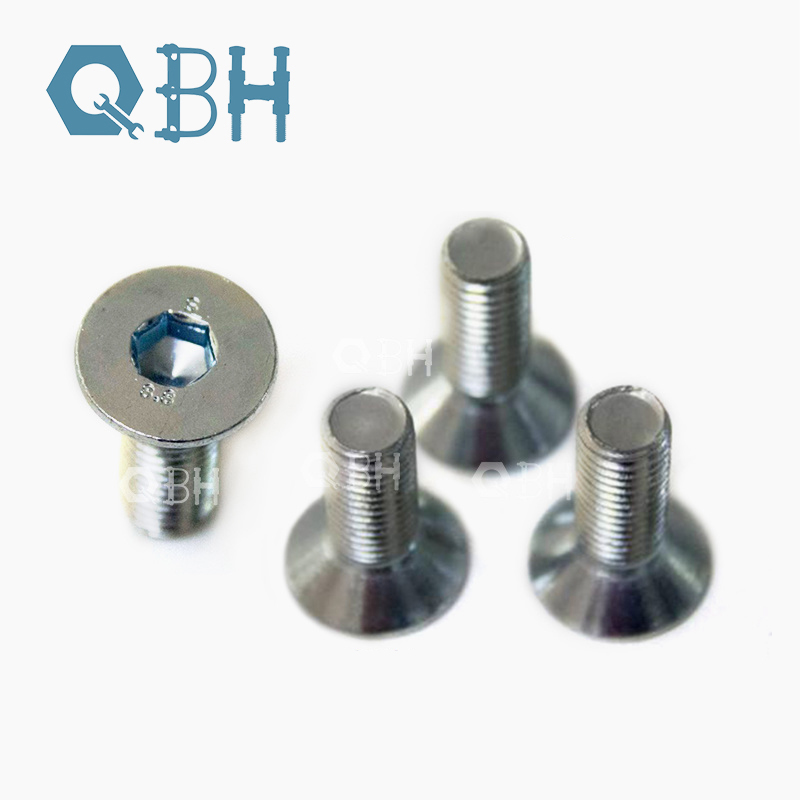
Table of Contents
What the DIN7991 Standard Covers
The DIN7991 flat head socket bolt is a metric fastener defined by the German DIN standard. It features a countersunk flat head with a hexagonal socket drive, allowing it to sit flush with the mating surface. This makes it a common choice where a smooth, recessed finish is required.
The standard specifies head dimensions, thread sizes, and tolerances. Buyers working with European or metric-based designs often reference DIN7991 when they need a reliable countersunk socket bolt with predictable geometry.
Design & Dimensional Features
The bolt's design centers on a 90-degree countersunk head and an internal hex socket. These features work together to provide secure, low-profile fastening.
Countersunk Flat Head
The flat head sits flush with the workpiece when installed in a matching countersink. This reduces protrusion and creates a clean surface.
Hex Socket Drive
The internal hex socket allows tightening with a standard Allen key. It supports high torque transfer and is less likely to cam out than some external drive types.
Thread & Length Options
DIN7991 bolts are available in a range of metric thread sizes and lengths. Buyers should match thread pitch and length to the application's material thickness and load requirements.
Flush
Countersunk Head
Sits flush with the surface for a clean finish.
Drive
Hex Socket
Allows high torque with standard Allen keys.
Standard
Metric Sizing
Available in a wide range of M3 to M20 sizes.
Materials & Surface Finishes
The performance of a DIN7991 flat head socket bolt depends heavily on its material and finish. Common options include alloy steel, stainless steel, and other corrosion-resistant grades.
- Alloy steel with black oxide or zinc plating for general industrial use.
- Stainless steel grades such as A2 and A4 for corrosion resistance.
- Hot-dip galvanized finishes for outdoor or humid environments.
- Plain finish for applications where coating interference is a concern.
- Property classes from 8.8 to 12.9 for varying strength requirements.
Selecting the right combination of material and finish helps prevent rust, galling, and premature failure in service.
Applications in Assembly
The flush profile of the DIN7991 bolt makes it useful in many mechanical and structural assemblies.
Machinery & Equipment
Used where moving parts or covers must remain flush to avoid interference. Common in gearboxes, frames, and machine guards.
Automotive & Transport
Found in brackets, panels, and interior fittings where a low-profile fastener is needed. The hex socket also allows compact tool access.
Industrial & Electrical Enclosures
Ideal for control cabinets and panels where a smooth exterior surface is preferred and tamper resistance is beneficial.
Installation & Selection Tips
Proper installation ensures the bolt performs as intended and maintains joint integrity. The table below summarizes key points.
| Consideration | Recommendation |
|---|---|
| Countersink angle | Match the 90-degree head angle of the bolt. |
| Thread length | Ensure engagement depth is sufficient for the load. |
| Material compatibility | Avoid dissimilar metals that may cause galvanic corrosion. |
| Torque | Follow the recommended tightening torque for the property class. |
| Lubrication | Use anti-seize where galling is a risk, especially in stainless steel. |
For detailed specifications and available sizes, visit the DIN7991 flat head socket bolt product page.
Frequently Asked Questions
DIN7991 is a German standard that defines the dimensions and tolerances for countersunk flat head socket bolts. It specifies the head shape, hex socket size, thread, and length ranges.
DIN912 is a cylindrical head socket bolt, while DIN7991 has a countersunk flat head. The DIN7991 is designed to sit flush with the surface, whereas the DIN912 head protrudes above it.
Common materials include alloy steel (property classes 8.8, 10.9, 12.9) and stainless steel (A2, A4). Surface finishes include black oxide, zinc plating, and hot-dip galvanizing depending on corrosion requirements.
Measure the total thickness of the parts being joined, then add the required thread engagement length. The bolt length should allow full engagement without bottoming out in blind holes.
Why Use the DIN7991 Flat Head Socket Bolt
The DIN7991 flat head socket bolt combines a low-profile countersunk head with a reliable hex socket drive. It is well suited to assemblies where a flush surface, high torque capability, and metric standardization are important. With the right material and finish, it performs consistently in machinery, automotive, and industrial enclosure applications.
To review dimensions, materials, and ordering options, explore the DIN7991 flat head socket bolt page or contact our team for assistance.
Looking for DIN7991 flat head socket bolts?
Contact us for specifications, samples, and bulk supply details.
Contact Us